An engine rewrite changes more than internal code. It changes how the game feels when you actually play it. FNF V-Slice retuned input evaluation, official charting structure, and how harder difficulties are presented.
This article focuses on the player side: adapting to the official engine, understanding ghost tapping behavior, and finding Erect or Nightmare content in the post-2024 game.
Audience: New players
Last verified: 2026-07-01
Builds checked: Desktop v0.8.4 (2026-03-26) and Android v0.8.5 hotfix (2026-04-06)
Before you start: finding the newer content
| Content | Where to find it |
|---|---|
| Weekend 1 | Story Mode |
| Erect remixes | Freeplay, then switch the selected song to Erect |
| Nightmare | The next step after Erect on supported songs |
| Pico Mix charts | Freeplay with Pico selected as the playable character |
Erect and Nightmare shipped with the Weekend 1 update (v0.3.0). They are part of the official game rather than separate downloads. The official variations documentation explains how these difficulty variations are structured.
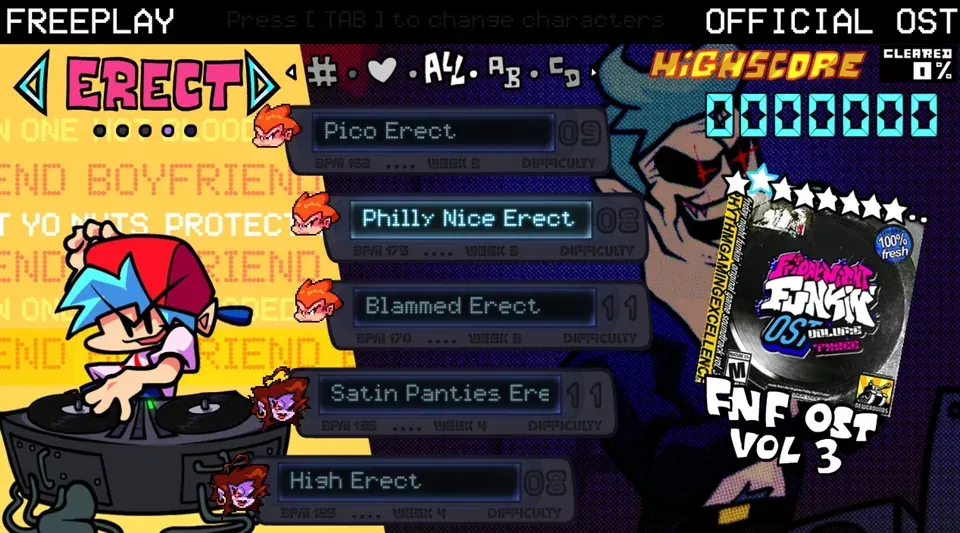
Figure 1 - Author screenshot. Freeplay with Erect selected on build v0.8.5.
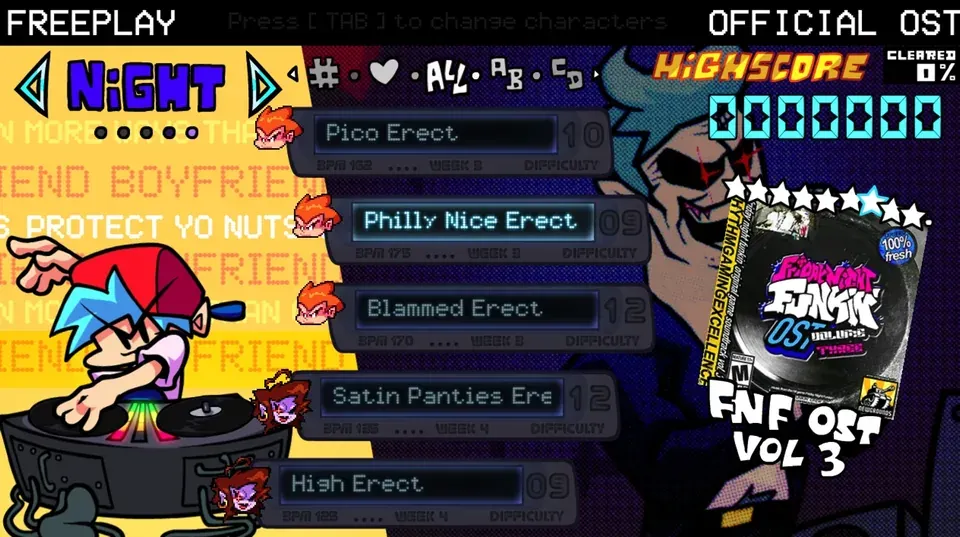
Figure 2 - Author screenshot. Freeplay with Nightmare selected on build v0.8.5.
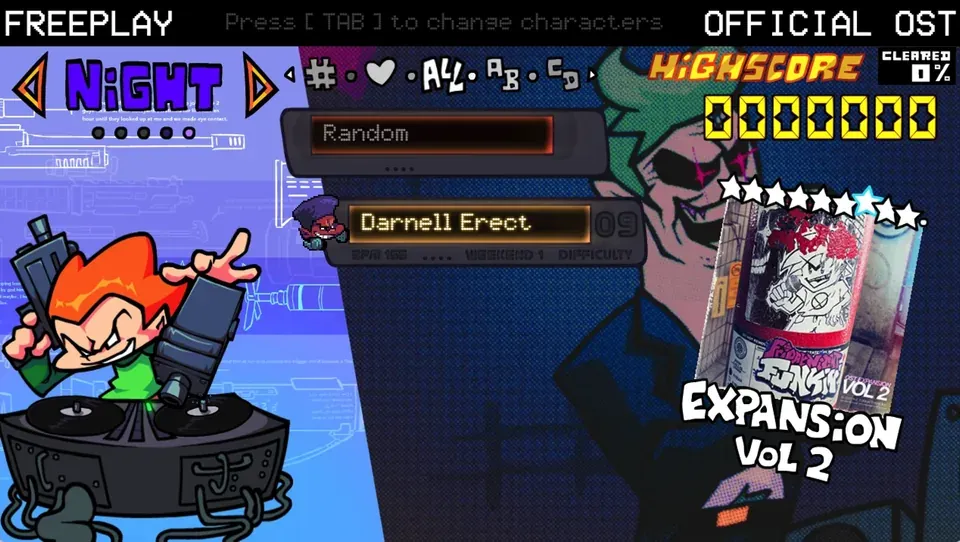
Figure 3 - Author screenshot. Pico Mix and Erect tracks in Freeplay on build v0.8.5.
1. Adapting to the official input feel
If you come from Psych Engine or other community forks, expect a different feel even on familiar songs. That does not mean one engine is objectively right and the other is wrong. It means they do not share the same timing, note handling, and penalty rules.
Hit registration and timing windows
The official engine evaluates notes against defined windows such as Sick, Good, Bad, and Shit. Input handling was reworked across the V-Slice era, and desktop builds gained another notable step forward with the SDL3 upgrade in v0.8.4.
Practical advice: do not assume your community-engine muscle memory transfers one-to-one. Recalibrate on a known chart before jumping straight into Erect or Nightmare.
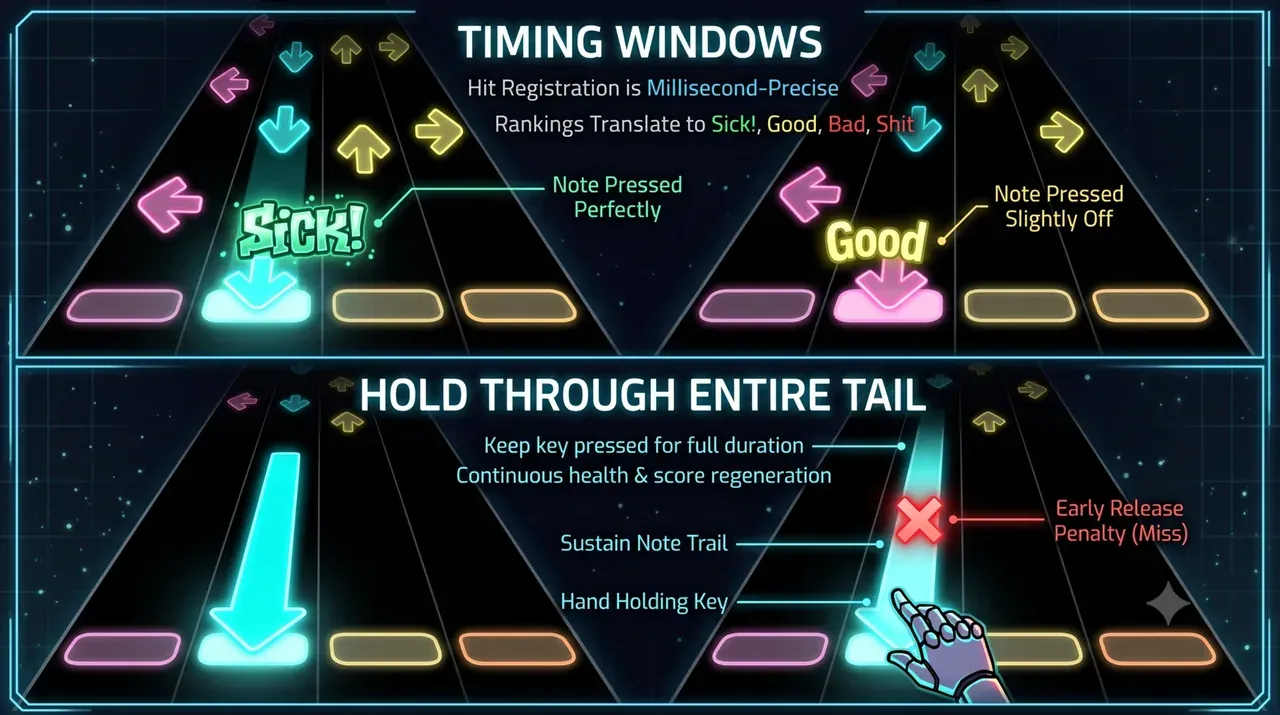
Figure 4 - Author-made diagram about timing windows and long-note handling.
Ghost tapping on official builds
Ghost tapping means pressing a key when no note is active without receiving a miss.
| Platform | Current behavior |
|---|---|
| Desktop | Ghost tapping is not treated as a standard toggle in the official options flow. Idle presses typically count as misses. |
| Mobile | Partial ghost-tap leniency exists because touch controls are easier to trigger by accident. |
The desktop design position is reflected in maintainer discussions such as PR #2564, issue #2651, and issue #2696.
If accidental misses are your main concern, the official accessibility option is usually No Fail rather than a standard ghost-tapping switch.
Sustain notes still matter
Long notes require a full hold through the tail.
- Releasing early can break combo and reduce health gain during the hold.
- v0.8.4 release notes specifically mention hold-note scoring improvements across framerates.
Community engines sometimes feel looser here. On the official engine, assume sustain tails are active gameplay, not decorative extensions.
2. Why Erect and Nightmare feel different
Erect and Nightmare are not just “more arrows.” The official approach generally tries to keep harder charts connected to the music rather than inflating density for its own sake.
Why Erect exists
Erect was tied to a Kickstarter milestone. The team wanted a harder official layer without simply stapling extra notes onto the original songs, so remixes and alternate charting structures became part of the design.
Nightmare extends that idea further with even denser patterns and faster pressure, making it the highest official difficulty tier introduced with that era.
Official charting tendency
Official higher-difficulty design tends to emphasize:
- Musical alignment with vocals, drums, or bass
- Pattern flow rather than pure single-lane endurance
- Visual communication when stage motion or chart events get more complex
That does not make Nightmare easy. It means the intended difficulty usually still tracks the song rather than relying on arbitrary note spam.
References
Official sources
- What are variations? - official modding documentation
- GitHub issue #2651 - ghost tapping discussion
- GitHub issue #2696 - ghost tapping rejected status
- GitHub PR #2564 - ghost tapping preferences discussion
- v0.8.4 release notes - hold note scoring fixes
- GitHub issue #4502 - Freeplay Erect navigation UX